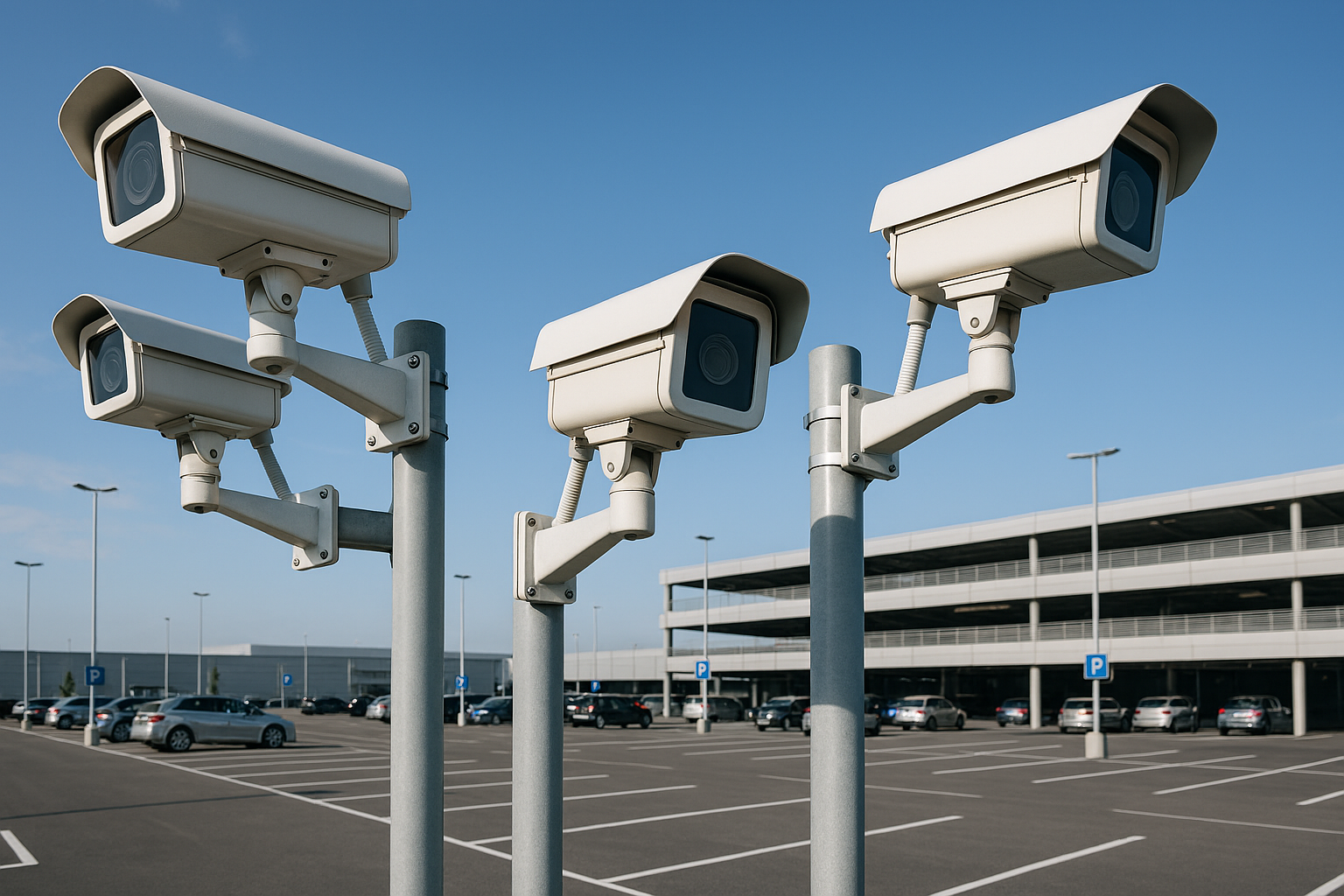
Security cameras in parking facilities serve two distinct functions: deterrence and evidence. A visible, well-placed camera system reduces the likelihood of incidents. When incidents do occur despite deterrence, recorded footage is often the only reliable evidence for insurance claims, police investigations, and liability disputes. Getting camera deployment right means thinking about both functions from the start, not retrofitting coverage after an incident reveals a gap.
Camera Placement Strategy: Coverage vs. Dead Zones
Start with entry and exit points. Every vehicle entering or leaving your facility should pass through a lane with a camera capable of capturing a readable license plate image. This means a dedicated camera angled correctly for the plate — not a wide-area security camera that happens to include the entry lane. Entry and exit cameras double as operational tools when integrated with LPR systems that tie into your parking monitoring system.
Inside the facility, the goal is eliminating blind spots rather than achieving complete coverage from a single camera. Stairwells, elevator lobbies, and pedestrian exits are disproportionately high-incident zones and need dedicated coverage. Drive aisles should be covered at each end, with additional cameras at mid-aisle if sight lines are interrupted by structural columns.
Ticket dispensers, pay stations, and entry/exit gates should have close-angle cameras capable of capturing card transactions and interactions. This footage is your primary tool for resolving payment disputes and investigating skimming attacks on payment hardware.
Fixed vs. PTZ Cameras
Fixed cameras cover a defined field of view continuously and are the backbone of any parking security system. They’re lower cost, require no active management, and provide reliable evidence coverage for their designated zone.
PTZ (pan-tilt-zoom) cameras can cover a wider area through active movement and remote control, but they only record what they’re pointed at in a given moment. A PTZ camera covering the south aisle isn’t covering the north aisle. For parking facilities, PTZ units are best deployed at command positions — entry overviews, large open decks — where human operators can direct them in response to incidents in progress. Relying on PTZ cameras as a substitute for fixed coverage creates gaps that become apparent after the fact.
Resolution matters. The minimum useful resolution for license plate capture is 2MP (1080p) at the appropriate focal length for the distance involved. Wide-area aisle coverage can use 4MP fisheye cameras to reduce unit count. Avoid over-relying on budget cameras with nominal resolution specs that degrade significantly in low-light conditions — parking facilities are often lit below ideal camera levels.
Retention Periods, Integration, and Liability
Industry standard for parking facility footage retention is 30 days minimum. Some operators extend to 60–90 days for facilities with monthly parkers, where a dispute about a vehicle damage claim may surface weeks after the incident. Check your insurance carrier’s recommendations — some policies require specific retention windows to support claims.
Integration with access control is increasingly standard. When your camera system and your gate/credential system share a common platform or API, you can tie vehicle images to specific access transactions, making investigation of unauthorized access or permit fraud dramatically faster.
On liability: camera systems don’t eliminate liability, but they change the evidence landscape. A facility with documented camera coverage that experienced an incident will be in a stronger position than one without. However, footage showing that a crime occurred in a visible, recorded area can also support claims that the operator had notice of safety conditions. Work with your insurance carrier and legal counsel to understand how your camera system interacts with your overall liability posture.
For parking access control fundamentals that complement a camera deployment, see our guide on parking access control credential hygiene.