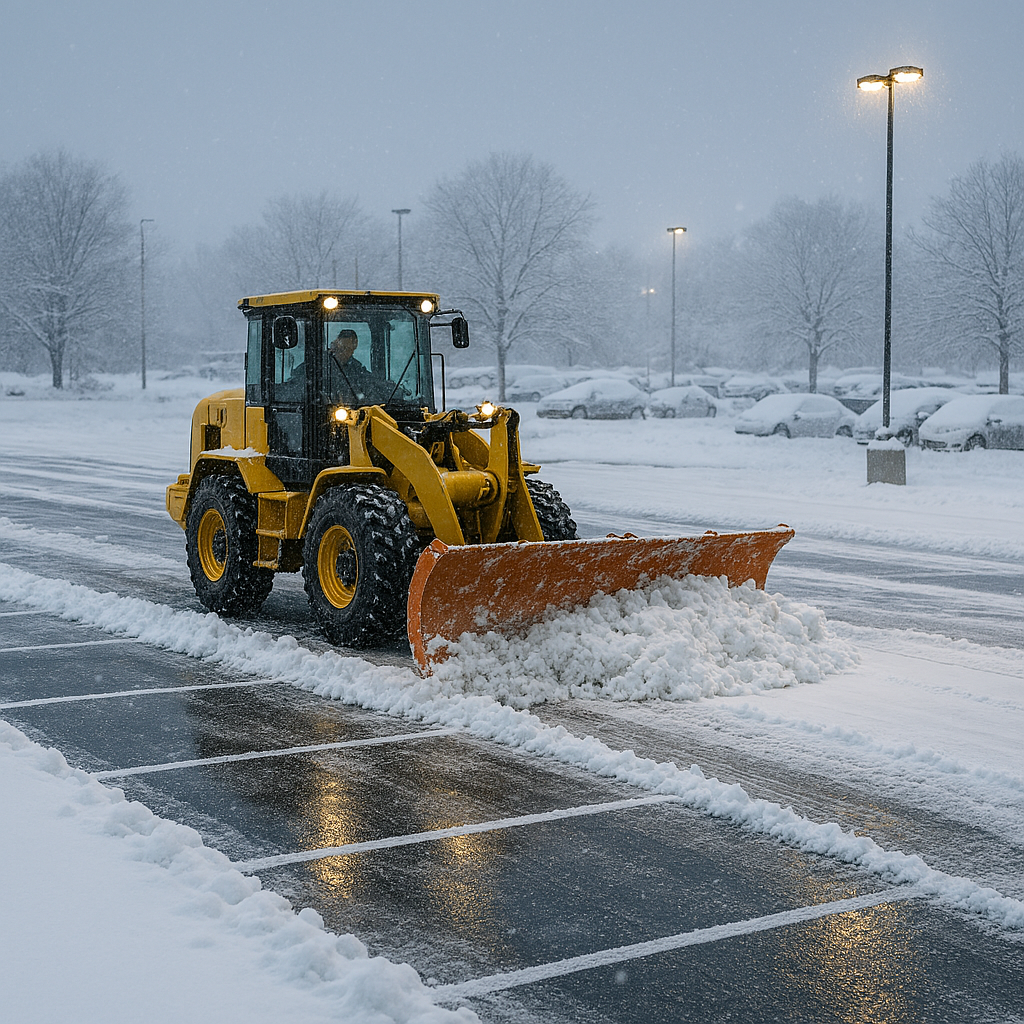
Winter preparation for parking operations is one of those tasks that’s easy to defer until it’s too late. A barrier gate that freezes in the open position on a Monday morning, a pay station that won’t process transactions below 20°F, or a lot that’s closed because the snow contractor didn’t show up — these are preventable failures that cost real revenue and damage customer relationships. A systematic pre-winter checklist keeps them from happening.
Snow Removal Contracts: What to Lock In Before October
The worst time to be negotiating a snow removal contract is after the first snowfall of the season. Contractors’ schedules fill quickly once winter arrives, and operators who wait too long get either poor service providers or premium pricing for last-minute access.
Effective snow removal contracts for parking facilities should specify:
Trigger depth. At what accumulation does the contractor mobilize? Most operators set a 1–2 inch trigger. Lower triggers increase cost but preserve lot functionality and reduce ice formation from compaction.
Response time. How long after reaching trigger depth does the contractor arrive? For commercial lots serving businesses, a 4-hour maximum is standard. For 24/7 operations, overnight response capability is essential.
Material and hauling. Salt or sand application should be included or explicitly priced. If accumulated snow must be hauled off-site (rather than piled), confirm hauling is in scope and that push pile locations won’t block fire lanes, accessible spaces, or visibility lines.
Damage liability. Snowplow operators occasionally strike curbs, wheel stops, signage, and pavement marking. Confirm the contract addresses damage liability clearly before signing.
Pair your snow removal plan with pavement protection awareness. Salt is highly effective for ice prevention but accelerates asphalt degradation and is corrosive to concrete surfaces over time. Use calcium chloride or calcium magnesium acetate in environmentally sensitive areas or on concrete decks. For parking lot pavement longevity, see our guide on parking lot pavement maintenance.
Winterizing Pay Stations and Barrier Gates
Cold weather affects parking equipment in predictable ways — most of which are manageable with proper preparation.
Pay stations running in sub-freezing temperatures need thermal management. Most modern units include internal heaters for the receipt printer, touchscreen, and card reader components. Verify that heating elements are functional before cold weather arrives and that the thermal cutoffs are set correctly. Moisture intrusion from freeze-thaw cycles is a common cause of electronics failure — inspect door seals annually and replace any compromised gaskets before winter.
Battery backup systems in pay stations need particular attention in cold climates. Lead-acid batteries lose significant capacity in cold temperatures. A battery that provides 4 hours of backup in September may provide 1.5 hours in January. Test under load before winter and replace batteries approaching the end of their service life.
Barrier gates have two primary cold-weather vulnerabilities: freezing of the gate arm pivot mechanism and ice accumulation on loop detectors embedded in the pavement. Lubricate pivot points with a lubricant rated for low-temperature operation (not standard WD-40, which thins in cold). For loop detectors, ensure the pavement cuts around the loop are properly sealed — water intrusion into the loop pocket causes false reads and equipment damage. Modern parking ticket machine systems with heated entry lane components handle cold weather substantially better than older generation equipment.
Staffing and Operational Adjustments
Winter storms compress the window between normal operations and chaos. Staff scheduling should account for:
Shift overlap during major events. Don’t plan tight handoffs during forecast storm windows. Overlap shifts by one to two hours when significant accumulation is expected.
Remote monitoring capability. Operators who can monitor equipment status remotely reduce the number of physical site visits required during dangerous driving conditions. If your equipment supports remote monitoring, ensure it’s configured before winter — see our article on remote monitoring of parking equipment.
Communication protocols. When your lot must close due to unsafe conditions, have a communication plan: updated signage, website notice, and social media if applicable. Customers who find a closed lot without explanation remember it more negatively than those who received advance notice.