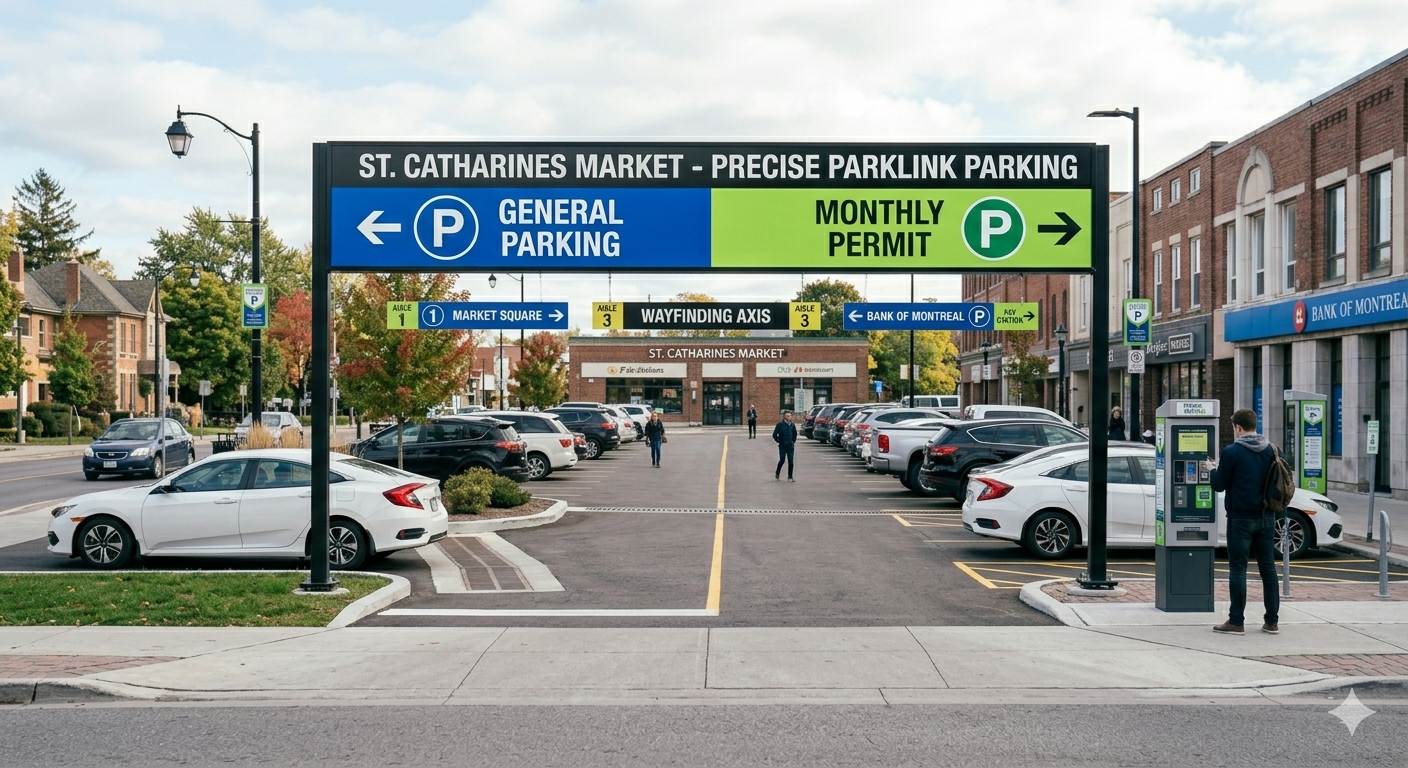
Poor wayfinding costs you money in ways that don’t show up directly on a revenue report. Drivers who can’t find the entrance give up and park elsewhere. Drivers who can’t find the pay station leave without paying or block traffic while searching. Drivers who exit the wrong way create near-misses that eventually become liability claims. Good signage is a revenue tool as much as a safety requirement.
Entry, Exit, and Rate Posting Requirements
Entry signage needs to do three things before a driver commits to entering: confirm this is a public parking facility, communicate the rate structure, and indicate payment method. If any of these are missing, you create friction that drives away customers and confusion that leads to rate disputes at the pay station.
Rate signs must be posted at or before the entry point, visible from the driver’s seat without exiting the vehicle. Most states require posted rates to include the hourly rate, daily maximum, and any special event rates if applicable. The signage must also indicate accepted payment methods — cash only lots that don’t post this create disputes that eat staff time.
For gated facilities, the entry sign should appear 20–30 feet before the gate mechanism so drivers can slow down and process the information before committing. The gate and ticket dispenser or pay-on-entry kiosk should be visible from the sign location. A parking lot layout that positions the entry gate too close to the street boundary leaves no room for this communication buffer.
Directional Flow and Pay Station Location Signs
Inside the lot, directional signage needs to answer one question at every decision point: where do I go next? Arrow signs should appear at every turn or aisle junction. One-way aisles need prominent signs at the aisle entrance — not just painted arrows, which drivers routinely ignore. Wrong-way incidents in parking facilities are more common than most operators acknowledge, and they are almost always a signage failure before they are a driver failure.
Pay station location signs are consistently under-invested. Most operators install the pay station and assume customers will find it. In reality, a driver who parks 100 feet from the station and doesn’t see clear directional signage will spend 90 seconds looking around before either guessing right, asking another driver, or giving up. Post “Pay Station” signs at the lot entrance, at the head of each aisle, and mounted on the pay station itself at eye level. Height matters: signs mounted above 7 feet are often not registered by pedestrians navigating at eye level.
For multi-level garages, floor identification signage is essential. Each level should be clearly numbered or color-coded at every stairwell, elevator, and vehicle ramp entry. Drivers who can’t remember what level they parked on generate intercom calls, complaints, and occasionally miss validation windows.
ADA Signage Specifics and What Inspectors Look For
ADA signage requirements extend beyond the accessible stall signs covered in compliance guides. The accessible route from the parking lot to the building entrance must be clearly marked with the International Symbol of Accessibility posted at each decision point along the route. If the accessible entrance is not the main entrance, directional signage must guide users from accessible stalls to the correct door.
Common failures that surface during inspections: accessible stall signs blocked by parked vehicles (post at the front of the stall, not the back), van-accessible designation missing, and sign height below the 60-inch minimum measured to the bottom of the sign.
Audit your signage from the driver’s perspective twice a year. Walk the entry sequence, the interior drive lanes, and the pedestrian exit path. Better yet, ask someone unfamiliar with the lot to navigate without guidance and note every moment of confusion. Those moments are your signage gaps. For additional operational audit frameworks, see our article on revenue control audit best practices.