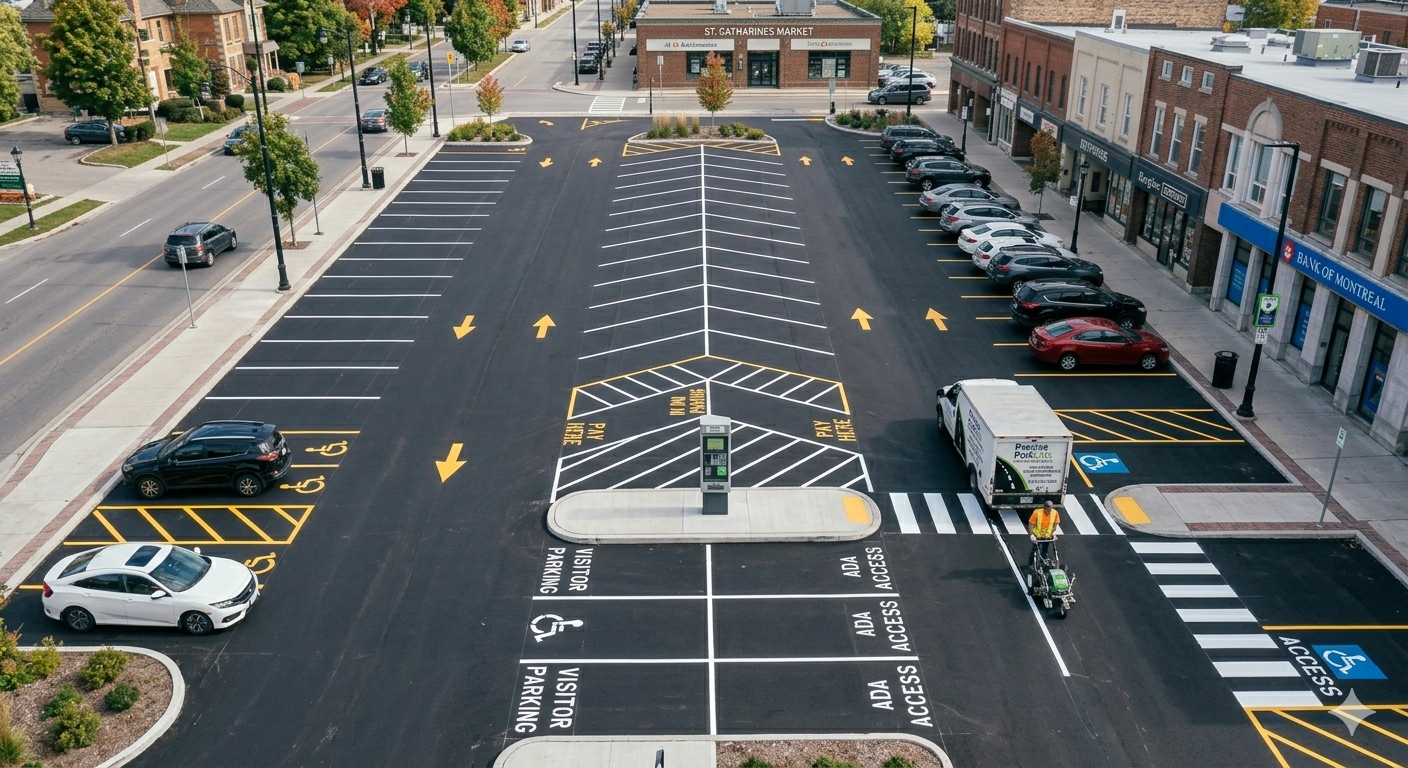
Faded parking lot stripes are easy to ignore until they become a problem. Drivers park crooked, stalls get wasted, and ADA violations accumulate quietly until a complaint or inspection forces the issue. Keeping your lot properly striped is one of the lowest-cost, highest-impact maintenance tasks available to lot managers — if you approach it with a clear plan.
When to Re-Stripe and What Standards to Follow
Most surface lots need re-striping every one to three years depending on traffic volume, climate, and the type of paint used. A good rule of thumb: if stripes are below 50% visible from a standing position, schedule the work. Don’t wait until the lot looks completely bare — drivers adapt to faded lines by defaulting to poor parking patterns that are hard to correct even after fresh stripes go down.
Standard stall dimensions in North America run 8.5 to 9 feet wide and 18 to 20 feet deep for 90-degree parking. Angled stalls (45 or 60 degrees) can use shallower depths but require wider drive aisles. For drive aisle width, 24 feet is the standard for two-way traffic; one-way aisles can tighten to 20 feet with angled stalls. Getting this right during striping is essential — it determines how many usable spaces you actually have. A well-planned parking lot layout maximizes stall count without sacrificing maneuverability.
ADA requirements are non-negotiable. The number of required van-accessible and standard accessible spaces scales with total lot size — a 100-space lot requires a minimum of 4 accessible spaces, at least one of which must be van-accessible. Van-accessible stalls must be 11 feet wide with an 8-foot access aisle, or 8 feet wide with a 16-foot access aisle. All accessible stalls need a clearly marked access aisle and proper signage. Errors here carry real enforcement risk, including fines and civil complaints.
Paint Types: Traffic Paint vs. Thermoplastic vs. Waterborne
The choice of marking material affects durability, cost, and cure time significantly.
Traffic paint (oil or waterborne) is the most common and affordable option. Oil-based formulas last longer but emit higher VOCs and dry slowly. Waterborne latex paints have improved significantly and are now the standard in most markets — they dry in 30 minutes, comply with environmental regulations, and perform well for 18 to 24 months on well-maintained asphalt.
Thermoplastic is a melted material applied hot that bonds deeply to the pavement surface. It lasts three to seven years and is common in high-traffic municipal applications. The upfront cost is two to four times higher than paint, but the lifecycle cost often pencils out for busy lots.
Epoxy-based paint offers excellent durability for concrete decks in parking garages but requires careful surface prep and longer cure windows.
DIY vs. Professional Line Striping
For small surface lots with straightforward layouts, renting a striping machine and doing the work in-house is feasible. Walk-behind striping units rent for $150 to $300 per day and are manageable with a two-person crew. The hidden costs are layout planning, string-line setup, and the time required to tape off areas and sequence the work properly.
For lots larger than 100 spaces, or any lot with a garage deck, complex traffic flow, or ADA stalls, professional striping contractors earn their fee. They bring laser guides, proper templates for accessible space markings, and the experience to complete the job in a single session with minimal traffic disruption.
Before any striping project, inspect the pavement. Striping over cracked or heaving asphalt accelerates deterioration and produces uneven lines. Address pavement issues first — re-striping a lot in poor condition is money spent twice. Learn more about seasonal planning considerations in our guide to seasonal demand and parking operations.