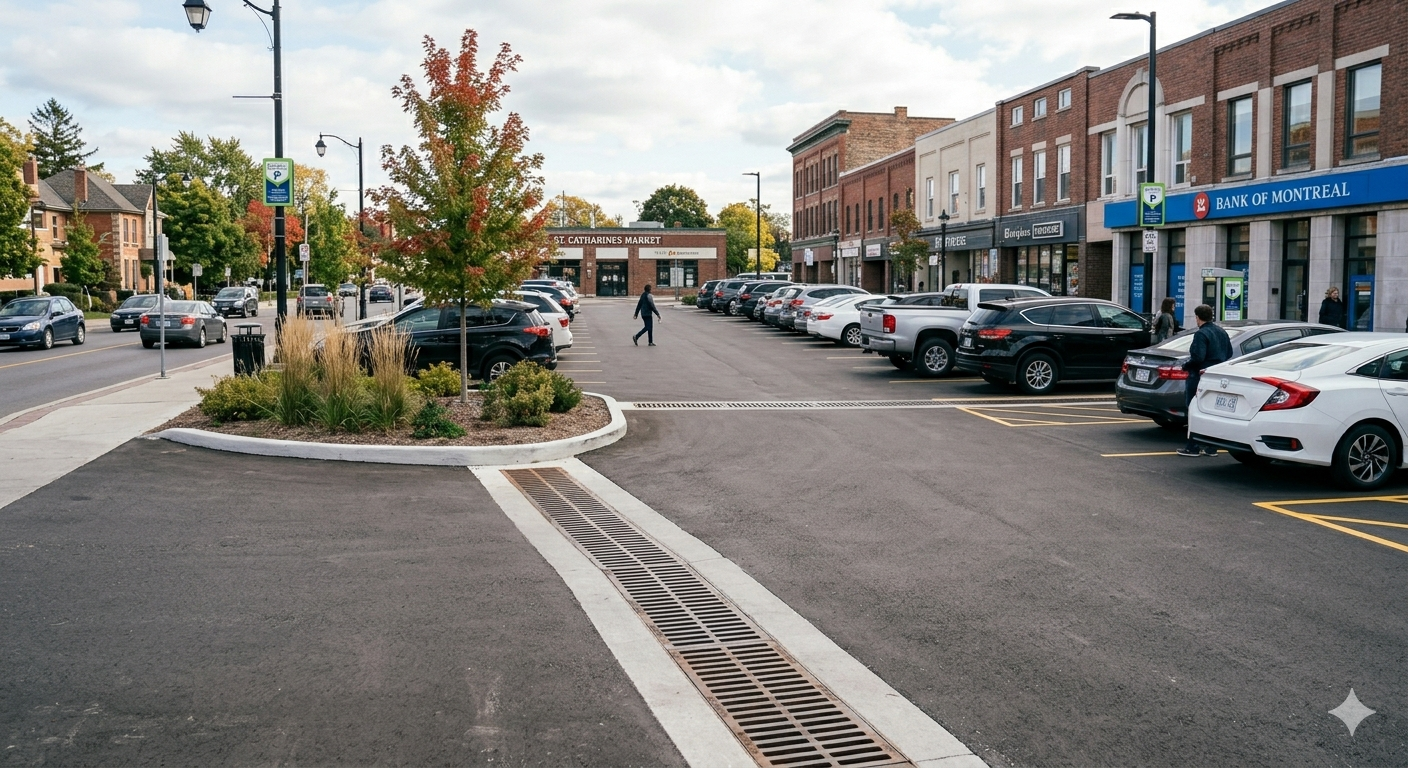
Stormwater management in parking lots sits at the intersection of regulatory compliance, pavement longevity, and environmental responsibility. Operators who treat drainage as a design-phase-only concern typically discover their mistake during the first heavy rainfall that floods their lot, creates sheet flow across adjacent properties, or triggers a municipal stormwater compliance notice. Understanding how drainage works — and what maintenance it requires — is a routine part of responsible lot management.
How Poor Drainage Destroys Pavement
Water is the primary enemy of asphalt pavement longevity. When drainage is inadequate and water pools on the pavement surface, it infiltrates cracks, saturates the base material beneath, and dramatically accelerates structural failure. A parking lot with adequate drainage and a well-maintained surface can last 25 years with standard crack sealing and resurfacing cycles. The same lot with standing water problems may need full-depth reconstruction in 10 to 12 years.
Surface slope is the foundation of good drainage. Parking lots should be graded to a minimum 1–2% slope toward drainage inlets or the lot perimeter, with no flat areas where water ponds. Drive aisles typically drain toward a center inlet or to perimeter swales. Stall grades should direct water toward the drive aisle, not toward a wall or structure.
Drainage problems reveal themselves most clearly in winter: ice formation patterns show exactly where water is accumulating during freeze cycles. A zone that consistently ices over when surrounding areas don’t is telling you that water is pooling there before freezing — a drainage issue, not just a salting frequency issue. Good parking lot layout design incorporates drainage grade planning from the earliest stages, before paving contractors establish grades that are difficult and expensive to correct later.
Catch Basin Maintenance and Inlet Protection
Catch basins — the grated inlets that collect surface runoff and channel it into the storm drainage system — are the working components of your drainage system. They require regular maintenance to function:
Annual inspection and cleaning. Catch basins accumulate sediment, debris, and petroleum residue from vehicle traffic. A basin that is 50% full of sediment has significantly reduced capacity and will overflow during heavy rainfall events. Clean annually at minimum; more frequently in lots with heavy tree cover or in markets with significant winter sand application.
Grate condition. Broken or missing grates are both a drainage failure and a pedestrian safety hazard. Inspect grates during each annual cleaning and replace damaged components immediately.
Outlet pipe integrity. The pipe that carries water from the catch basin to the storm system can become blocked by root intrusion, sediment, or structural failure. Camera inspection of outlet pipes every 5–7 years identifies problems before a rainfall event makes them visible.
Failing to maintain catch basins is a common cause of municipal stormwater complaints. When a blocked basin causes runoff to sheet-flow off your property onto adjacent land or into the roadway, you become the source of a drainage problem that neighbors and municipalities notice.
Municipal Stormwater Compliance and Permeable Options
Most municipalities regulate stormwater runoff from commercial properties under National Pollutant Discharge Elimination System (NPDES) permits, which are administered at the state level. Large impervious surfaces like parking lots generate significant runoff volumes and pollutant loads (oil, heavy metals, sediment) that municipalities are required to manage under federal Clean Water Act framework.
Depending on your jurisdiction and lot size, you may be subject to:
- Stormwater permit requirements that mandate regular inspection logs and maintenance records
- Limits on pollutant discharge concentrations requiring oil/water separators or vegetated filter strips
- Post-construction stormwater management requirements tied to any renovation permits
Permeable pavement options — permeable asphalt, permeable concrete, or interlocking permeable pavers — allow stormwater to infiltrate through the pavement surface rather than running off. They reduce runoff volume, improve water quality, and in many jurisdictions qualify for stormwater fee credits that reduce municipal charges. The tradeoffs are higher installation cost (20–40% premium over standard asphalt) and more maintenance-intensive cleaning (surface vacuuming to maintain permeability annually).
Permeable pavement works best in lower-traffic areas of a lot — overflow zones, perimeter stalls — where heavy vehicle loads won’t accelerate clogging of the void structure. For a broader view of seasonal maintenance timing that coordinates drainage inspection with other operational cycles, see our guide on seasonal demand and parking planning.