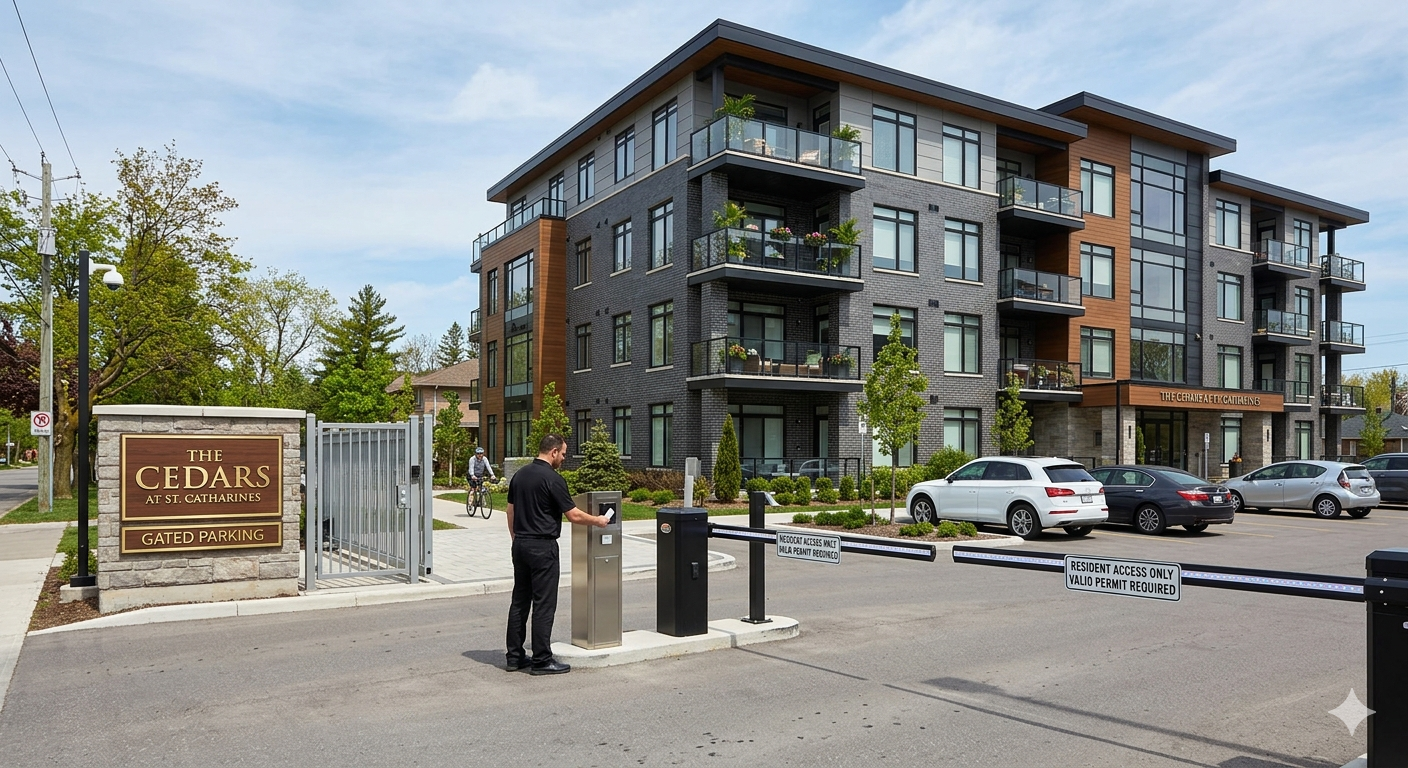
Parking in multifamily residential properties is one of the most friction-generating aspects of tenant relations — and one of the most under-managed revenue opportunities in the asset class. When parking allocation is unclear, enforcement is inconsistent, or access control is nonexistent, the result is tenant complaints, lost revenue, and property condition issues that compound over time. Here’s a practical framework for getting residential parking operations right.
Tenant vs. Visitor Parking: Getting Allocation Right
The foundation of any multifamily parking program is a clear allocation policy documented in the lease. Every tenant should know at lease signing exactly how many spaces are assigned to their unit, what credential they’ll receive, and what the policy is for additional vehicles.
Standard allocation models:
Assigned stalls provide each unit with a specific numbered space. This eliminates conflict over who is parking where but creates underutilization when tenants are away. Assigned stalls work best in gated communities where there is genuinely insufficient total capacity.
Unassigned permit parking gives each unit a permit (hang tag, decal, or RFID) that allows parking in any designated tenant zone. This is more flexible and tolerates variable occupancy better, but requires active enforcement to prevent permit fraud and non-permit vehicles from filling the zone.
Tiered allocation charges for parking separately from rent. Units with no vehicle pay nothing; units with one vehicle receive one space; additional vehicles are charged a premium. This approach monetizes parking explicitly and tends to optimize allocation naturally because tenants self-select based on actual need.
Visitor parking should be explicitly separated from tenant parking, either physically or by permit type. Visitor zones without time limits routinely become de facto overflow tenant parking within months of opening. Set a 24 or 48-hour maximum stay and enforce it. An automated parking system can make visitor parking management significantly more efficient by issuing time-limited digital credentials without staff involvement.
Towing Policy and Enforcement Culture
A towing policy only works if it is enforced consistently. Inconsistent enforcement is worse than no enforcement — it creates tenant resentment without achieving the intended allocation outcome. If you post “unauthorized vehicles will be towed” and then fail to tow, the policy becomes a suggestion.
Before implementing active towing enforcement, communicate clearly: post signage, send a notice to all residents, and set an effective date. This gives good-faith violators a chance to correct their behavior. After the effective date, enforce uniformly.
Select a towing company with a documented release process and a 24/7 contact line. Tenants whose vehicles are towed will contact the property management office immediately — you need to be able to provide the storage location and release process without delay. Failure to do so is the single most common source of tenant complaints in towing enforcement situations.
Revenue Potential and Access Control
Properties that charge separately for parking — rather than bundling it into rent — generate meaningful additional revenue and reduce competitive pressure on base rent. In urban markets, parking spaces generate $100–300/month as a standalone line item. In suburban markets, $50–150 is typical. A 100-unit property with 80 parking spaces generating $100/month each adds $96,000 annually in revenue that bundled pricing leaves invisible.
Access control investment makes sense at any scale above about 30 spaces. Gate systems, RFID readers, and LPR-based access ensure that only credentialed vehicles use tenant spaces — which protects the allocation you’ve established and the revenue model that depends on it. Properties that manage access physically (no gate, patrol only) consistently see higher rates of allocation abuse and more tenant complaints.
For remote monitoring capabilities that allow property managers to oversee multiple properties from a central location, review our article on remote monitoring of parking equipment.