Campus parking management is uniquely complex because of the people involved. Faculty who have parked in the same spot for 15 years. Students who push back on every citation. Staff who expect conveniences that the permit system doesn’t support. And administrators who want parking to generate revenue without creating constituency complaints. Navigating this environment requires clear policy, consistent enforcement, and technology that reduces the human judgment calls that generate the most friction.
Permit Tiers and the Politics of Allocation
Most university campuses operate a tiered permit system with distinct zones for different user categories. A typical hierarchy:
Reserved faculty/executive — Closest proximity to buildings, often individual assigned stalls. High permit price (or institutionally subsidized). Small in count relative to total faculty population.
Faculty/staff general — Defined zones closer to academic buildings, priced at a level that represents a meaningful but not prohibitive cost. Demand in this tier almost always exceeds supply at research universities.
Student resident — Permits for students living on campus who keep vehicles on campus. Often restricted to perimeter or structure parking to keep core academic zones available during the day.
Student commuter — The largest permit category by count at most institutions. Typically assigned to perimeter lots with shuttle access or structured garages. Price is price-sensitive; even modest rate increases generate student government complaints.
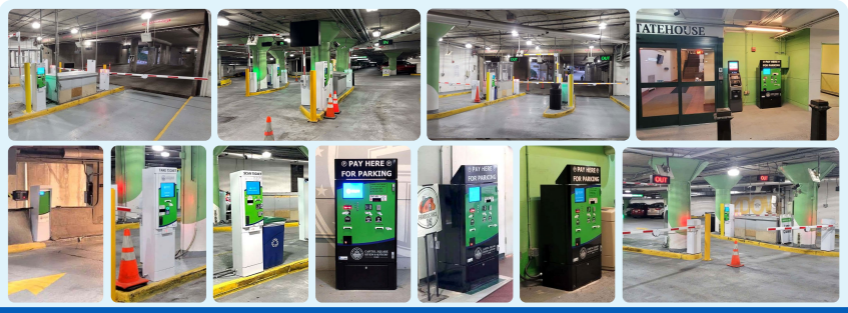
Visitor — Short-stay, pay-by-the-hour access to designated visitor lots. Often managed through pay stations, kiosks, or virtual permits.
Allocation disputes — faculty who feel their zone is too far, students who want commuter access to faculty zones, staff who share classification ambiguity — are endemic to campus parking and unavoidable. Clear written policy with defined appeal mechanisms absorbs most of this friction.
LPR vs. Hang Tags: Enforcement Technology Trade-offs
Hang tags and annual decals remain common on campuses because they’re cheap to issue and require no infrastructure. The enforcement problem is significant: tags transfer among vehicles, get loaned to non-permit holders, and generate manual verification overhead for enforcement officers who must visually inspect each vehicle.
AI LPR camera systems provide enforcement-grade plate reading without requiring permit holders to display anything — the vehicle’s plate is the credential. Enforcement officers driving patrol routes can run LPR reads across an entire lot in minutes, flagging violators automatically against the permit database. Citation accuracy increases, enforcement time per lot decreases, and the transfer-of-credentials problem is eliminated because the plate belongs to the vehicle, not the permit holder.
Virtual permits — where the permit is a plate number registered in the database rather than a physical object — are a natural companion to LPR enforcement. Permit issuance becomes an online transaction, replacement permits for plate changes are instant database updates, and the entire credential issuance workflow moves out of a physical office.
For a deeper dive on LPR deployment best practices, see our article on common LPR camera pitfalls.
Event Day Overflow and Enforcement Culture
Home game days, graduation weekends, and major campus events stress parking systems that are sized for typical academic day loads. Without a defined overflow plan, event traffic spills into adjacent neighborhoods, blocks emergency access, and generates the kind of coverage that becomes a facilities management talking point for years.
Effective event day parking plans include: designated overflow lots (often athletic practice fields or partner lots) with clear wayfinding from entry points, temporary staff positioned at overflow lot entrances to direct traffic, suspension of standard permit zone enforcement in zones that become event parking, and a post-event traffic sequencing plan that releases lots in order to prevent exit lane gridlock.
Enforcement culture on campus is worth managing explicitly. A citation program perceived as predatory — officers writing tickets on technicalities, grace periods not honored, appeals denied without review — generates more institutional friction than the revenue is worth. A program perceived as fair and consistently applied earns grudging acceptance even from people who received citations. Document appeal outcomes, track appeal rates by zone and officer, and use that data to identify enforcement practices that are generating disproportionate complaints.