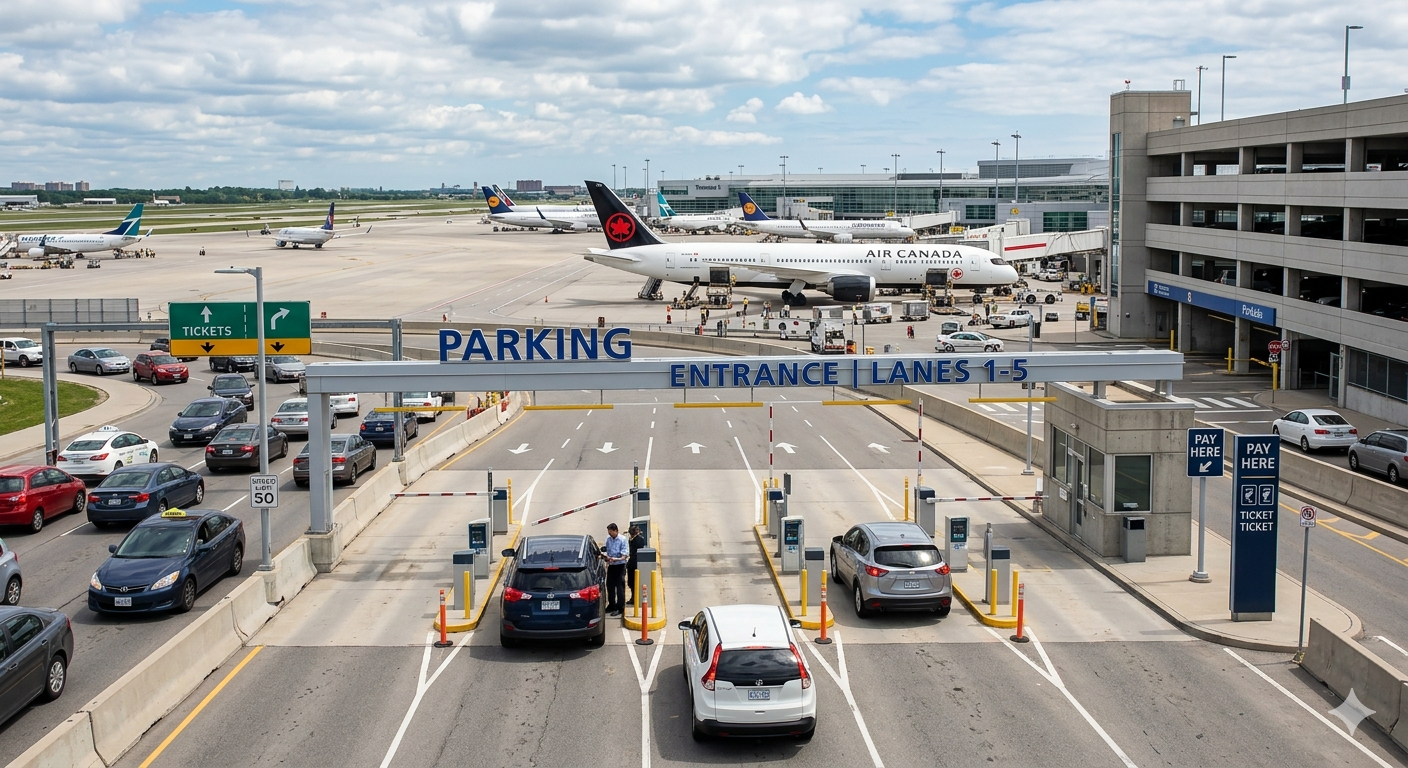
Airport parking is parking operations at its most demanding. The volumes are large, the customer expectations are high, the consequences of equipment failure are immediate and visible, and the revenue stakes justify significant technology investment. For operators who manage airport parking facilities or aspire to — or who want to understand best practices that translate to smaller-scale operations — here’s how top-performing airport parking programs are structured.
Short-Term vs. Long-Term Lot Structures
Airport parking product segmentation typically follows a consistent model:
Short-term lots are located immediately adjacent to terminals, designed for pick-up and drop-off, passenger waiting, and stays of under a few hours. Rates are high — often $4–6 per 30-minute increment — because proximity commands a premium and the facility needs to discourage long stays that would block terminal access. Short-term lots require aggressive turnover management: dwell time monitoring, staff presence to prevent abandoned vehicles, and tight rate structures that make multi-hour stays expensive.
Long-term lots are located further from the terminal — sometimes requiring a shuttle — at substantially lower daily rates. These facilities serve the core of airport parking revenue: travelers departing for multi-day trips. Economy lots competing with off-airport operators need rate discipline and value-adds (shuttle frequency, covered options, loyalty programs) to retain market share.
Garage products bridge the gap: covered, closer than economy lots, priced between short-term surface and long-term economy. They’re the highest-margin product per stall and the most capital-intensive.
Revenue mix management across these tiers is sophisticated at major airports. Automated parking systems with dynamic inventory management can shift pricing and availability signals in real time based on occupancy thresholds across the whole portfolio.
PARCS at Scale and Pre-Booking Integration
Parking Access and Revenue Control Systems (PARCS) at airport scale handle transaction volumes and integration requirements that far exceed typical commercial facility demands. Entry and exit processing must support peak throughput of hundreds of vehicles per hour per lane during morning departures and evening arrivals. Lane equipment — ticket dispensers, gate arms, pay stations — must be rated for continuous high-cycle operation, and backup systems must be specified for every critical component.
Pre-booking integration is now standard at most major airports and growing at regional facilities. Pre-booked reservations require the PARCS to recognize a booking reference (via QR code, LPR plate match, or RFID) at entry, grant access without a ticket transaction, and reconcile the pre-paid revenue in the daily close. The operational benefit is substantial: pre-booked customers move through lanes faster, reducing peak congestion, and the revenue is already captured before arrival.
At smaller regional airports, the operational model often parallels large commercial garages more than mega-airport operations — making the equipment and management practices from commercial PARCS directly applicable.
Customer Flow at Peak Travel Periods
The Thanksgiving and Christmas travel windows are the most demanding operational tests airport parking facilities face annually. Occupancy hits or exceeds 100% (counting waitlists) across all products, shuttle dwell times lengthen, payment queues build at peak periods, and equipment failures that are manageable in normal operations become crises.
Peak period preparation includes: confirming shuttle fleet availability and driver staffing with vendors 60+ days out, staging additional staff at entry and exit lanes during peak departure and arrival windows, pre-positioning maintenance staff on-site during the heaviest days rather than relying on on-call response, and communicating real-time availability to travelers via website and digital signage.
Operators who pre-book to capacity and close availability signals to drive-up customers manage peak periods more predictably than those who accept all comers. Overselling — accepting more reservations than spaces, based on no-show assumptions — is practiced at major airports with sophisticated yield management systems. It carries revenue upside and customer-service risk that smaller operations should approach cautiously.
For revenue and rate optimization strategies that apply across all facility types, see our article on dynamic pricing for parking lots.